
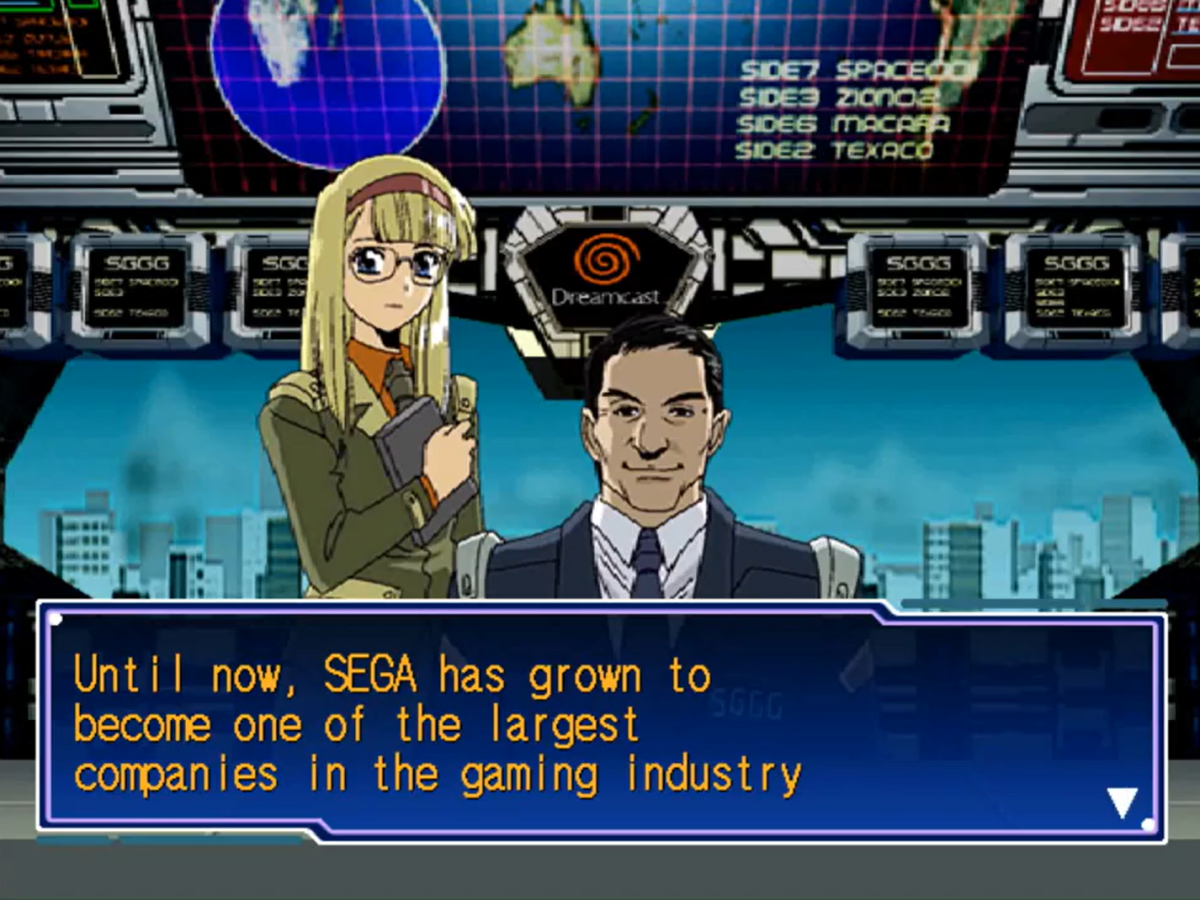
Games take on mythical stature for any number of reasons. Sometimes, software becomes legendary simply because of how difficult it is to play it. And in the pantheon of officially licensed Dreamcast games — released while Sega was still nominally a first-party developer — there probably isn’t a more mythical title than Segagaga.
If you’re a hardcore Sega fan (and if you’re reading a site literally called Sega Does, you probably are), Segagaga doesn’t really need an introduction. The role-playing game was one of the last major releases on the Dreamcast, hitting store shelves just days before the console was discontinued in Japan.
And Japan is where it would remain for the next quarter century. Considering how niche and irreverent the game was, there was zero chance of Sega translating the game for English audiences. You could still play physical copies of the game and download ROM files, but unless you were fluent in Japanese there’s no way you could play the game or understand anything that was going on.
Of course, English fan translations are nothing new in the world of retro gaming. For whatever reason, though, Segagaga remained an untranslated title for decades. Some say it’s because the humor is so idiosyncratically Japanese that the jokes really don’t translate into English (the same way so many English puns wouldn’t work in Japanese, naturally.) Others contended that its storyline was too offensive and featured a lot of stereotypes that we frown upon today. And some people simply assumed it was too bizarre to be sufficiently translated. The most realistic explanation, though, is the most boring one; the game’s image-based text files were just too complicated for anyone who wasn’t bilingual and extraordinarily dedicated to parse through.
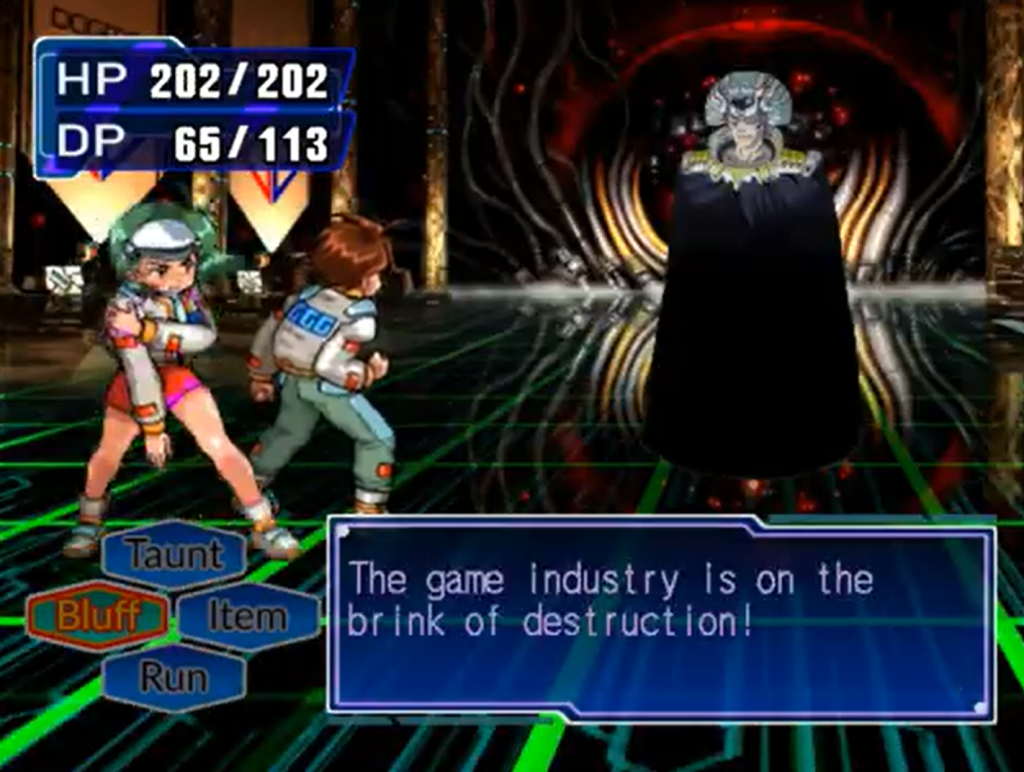
We’ve seen screen shots and watched YouTube videos and tried to make sense of the jumble of kanji on our screens for years and years. But it wasn’t until 2026 that an adequately translated version of the game became accessible on the Web. And yes, even with this sliver of digital manna dropped onto our plates, nerds on the internet are STILL complaining because the translator purportedly used A.I. services to translate the title. Obviously it’s not a perfect, one to one translation of the game but it’s far and away the best translation of the game we’ve gotten to date. Come to think of it, it might be the only English translation of the game so far. Just be thankful for what you’ve got, guys.
Probably the only thing more bizarre than Segagaga, the game, is the story of its development. Pull up a chair kids, this is going to be a good one.
The game itself was a passion project by developer and designer Tez Okana (who would later play a pivotal role in the development of several outstanding GBA games, including Astro Boy: Omega Factor and Gunstar Super Heroes.) The catch is, he worked on Segagaga in secret — and without authorization from Sega — for the better part of two years. Which means as far back as 1999 he was already seeing the writing on the wall for Sega; an inevitable exit from the console manufacturing business and a near video game monopoly on the horizon for Sony.
Amazingly, when Okana finally did come clean about the game the suits at Sega actually liked it. Not only was he given the green light to finish the game, Sega even went above and beyond to promote it and market it as a Sega Direct store exclusive. It even got a special edition VMU shaped like an old school Mega Drive console; later, a special collector’s edition version of the game with a T-shirt and enamel pin set was also released. If that wasn’t enough, no less than three different Segagaga albums were released after the game came out.
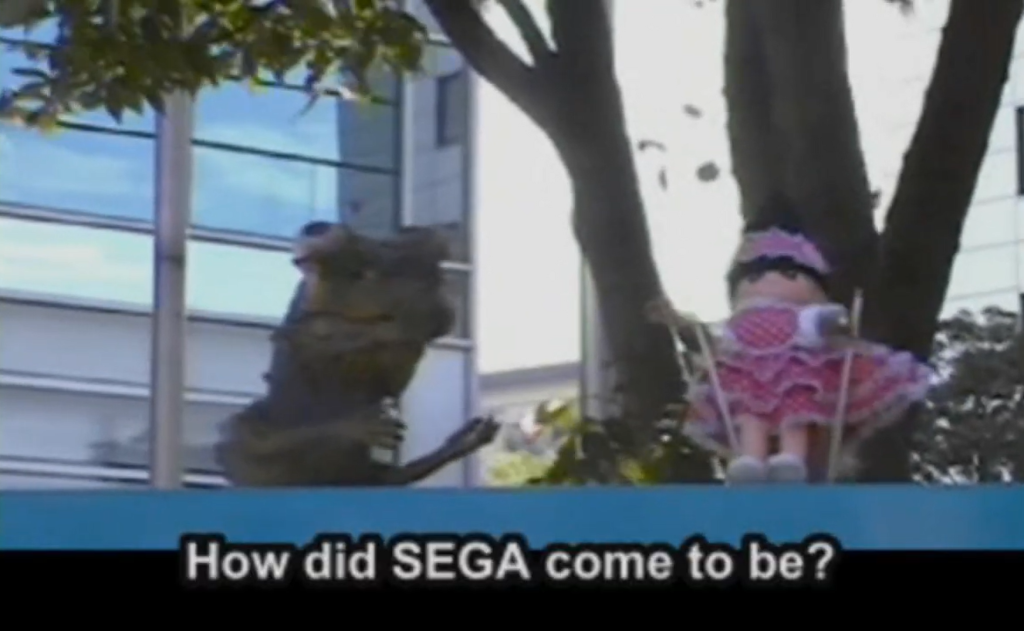
It’s an impressive footprint for a game that, for better or for worse, has zero footprint in the North American and European gaming markets. Which begs the question: what exactly was this enigmatic Segagaga game about, anyway?
Well, it’s basically a self-mocking satire about Sega’s abject failure as a business … made by, endorsed by and financed by Sega itself. And trust me, every time you think this game’s existence can’t possibly get any stranger — it does.
The title is basically two games in one; a JRPG parody (complete with turn based battles culled right out of Phantasy Star) and something of a business simulation. You play a character named, appropriately enough, Sega, who is tasked with saving the company — also called Sega, because why bother being subtle at this point — as it continues to lose market share to arch-rival company Dogma … whose logo, console and overall portfolio looks a LOT like Sony.
That … wasn’t a coincidence.
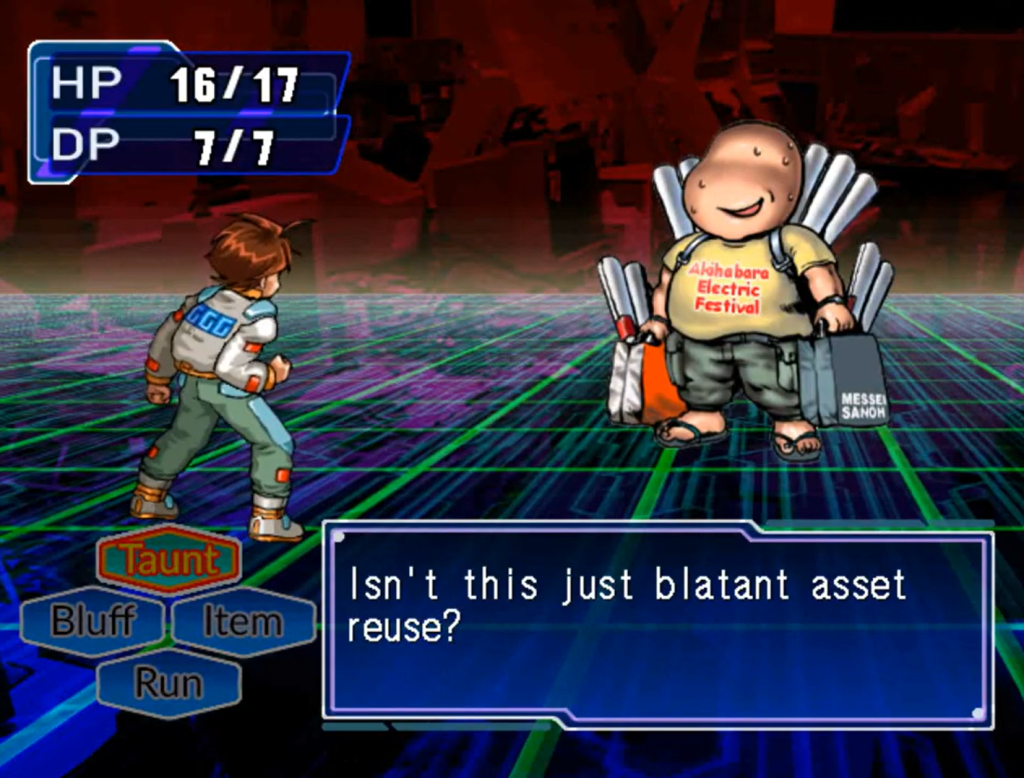
Like I said earlier, it gets weirder. You don’t actually fight any of the foot soldiers from Dogma at the beginning of the game, because that would make too much sense. Instead, you have to terrorize Sega’s own underpaid and overworked staff so they won’t crack under crunch time pressures. Instead of using spells or weapons, though, you break the will of your employees/enemies by berating them with insults. Once an enemy is defeated they join your ranks, which is where the game turns into a business simulator. From there you have to set their work hours, salary and decide which aspect of game design best suits their personality. There are a lot of variables to tweak along the way, like an individual employee’s creativity level or their workplace endurance. The gist of it is you can either use your armada of office drones to make a handful of “high quality” games and hope one of them becomes a breakout hit or cajole them into cranking out rush jobs en masse to produce a slight profit sans any of the risks of a higher budget, AAA release.
And yes, I still can’t believe how eerily prophetic this game is, either.
The game has a (nominal) three-year work cycle where you try to win as much market share back from Dogma as possible. There are a couple of different endings depending on how much share you win (or don’t win back) so there’s obviously some replay incentive here. And since it is a meta Sega game, of course you’ll be getting a ton of cameos from the likes of Sonic, Ristar and Samba De Amiga. There’s even a side-scrolling shooter mini-game that feels a lot like the old Thunder Force games … and sure enough, the enemies look just like ancient Genesis and Master System consoles.
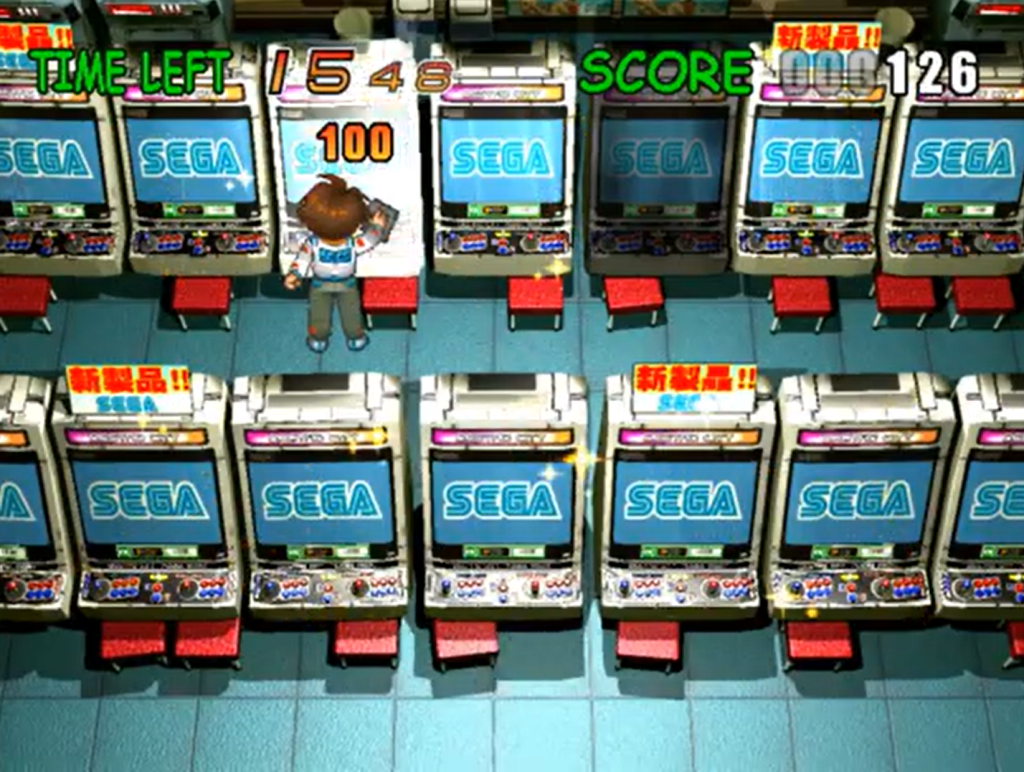
So it’s definitely an inventive and intriguing idea for a game. But now that we can actually play it — to some degree, anyway — was it actually worth the 25 year wait?
Well … yes and no.
Let’s address the whole translation controversy first. Nobody is expecting a perfect conversion and I feel that the English patch we got earlier this year at least maintains the spirit and intent of the original game, even if some of the translations are dodgy. It’s certainly a funny game and its humor feels way ahead of its time. And Sega fanatics are going to be glued to their controllers (or keyboards), just to see what obscure Easter egg might show up next.
The core problem with Segagaga, though, is that despite its cool concept and amusing story, it’s not a very fun game to actually play. The turn-based battles are very repetitive and take way too long. A lot of the same jokes are repeated over and over again and after a while you just kinda want the actual gameplay to end so the story will continue. Along those same lines, the business simulator aspects aren’t terribly intuitive and even with the full English translation you might be mystified by what certain sliders and dialog box options are supposed to do. The graphics and audio are intentionally lower grade than usual for the Dreamcast and it does give the game a certain no-budget charm. There’s not a whole lot of exploration elements to the game, but what’s included is just kinda’ decent and not much more. But hey, unlocking Yu Suzuki’s iconic jacket might be worth the grinding for some gamers.
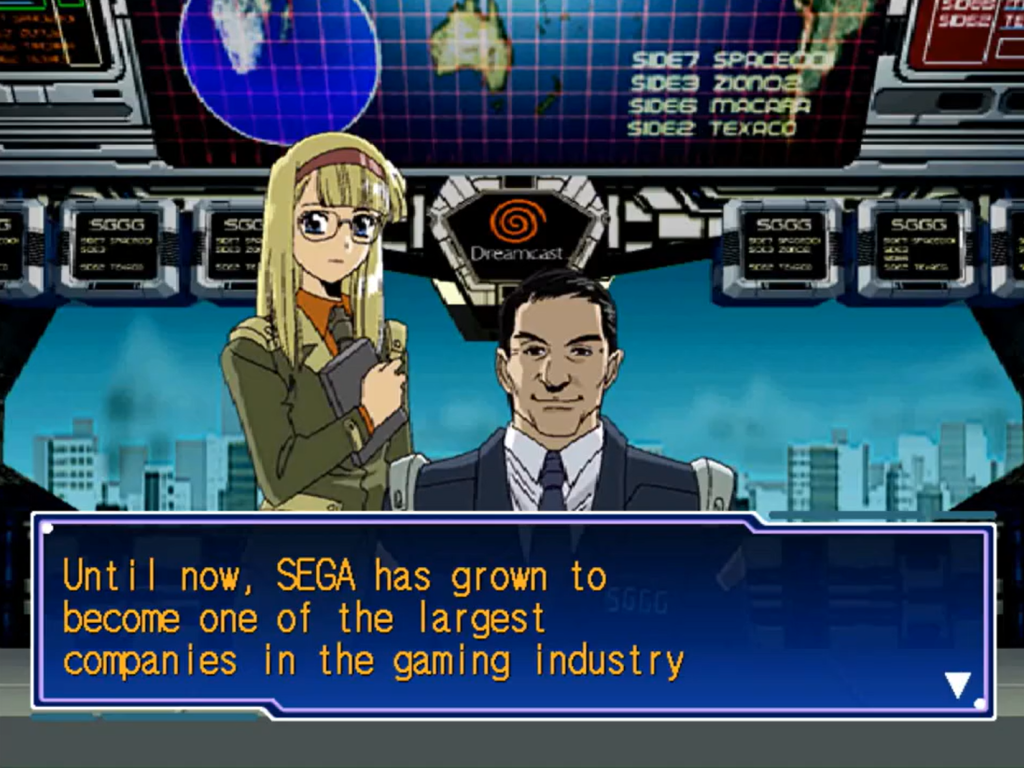
I guess the best way to put it is that Segagaga is a great commentary on video game culture, even if it isn’t a great video game itself. I doubt anybody really thought it was a long-lost masterpiece on par with Shenmue and Soul Calibur and I can understand how some people might be disappointed after waiting this long to play the title. But if you go into it with lowered expectations and don’t mind gritting your teeth through some very repetitive RPG sections, you might moderately enjoy Segagaga as the ultimate curiosity piece on the Dreamcast.
Despite the game’s issues — and it has a lot of them — it still feels like a pretty fitting finale for the beloved and dearly departed DC. It’s basically Sega bowing out with a smile on their face instead of a frown … and if you’ve got to exit the hardware race, that’s the best way to do it.
One reply on “Segagaga: The Dreamcast’s White Whale is Finally Here!”
Don’t forget meeting Alex Kidd and hearing his sad tale of getting kicked to the curb after Sonic took his spotlight.